
Foot Pressure Scan and Foot Analysis
muscatmed-admin2026-06-19T16:19:08+04:00Computerized Foot Pressure Scan in Muscat: Custom Orthopedic Insoles & Foot Correction
If you suffer from chronic foot pain, lower back misalignment, or have noticed your child’s ankles rolling inward when walking, a generic over-the-counter shoe insert cannot fix the root cause. True, lasting postural alignment requires clinical, structural precision.
At our premier clinic, we provide the most advanced computerized foot pressure scan in Muscat. Using state-of-the-art diagnostic plate systems, our comprehensive digital foot analysis maps out your exact gait cycle, uncovers hidden skeletal high-pressure points, and gives our orthopedic specialists the exact data needed to craft fully customized medical insoles and corrective footwear right here in Oman.
Foot Pressure &
Function Analysis
What is Foot Pressure Scan?
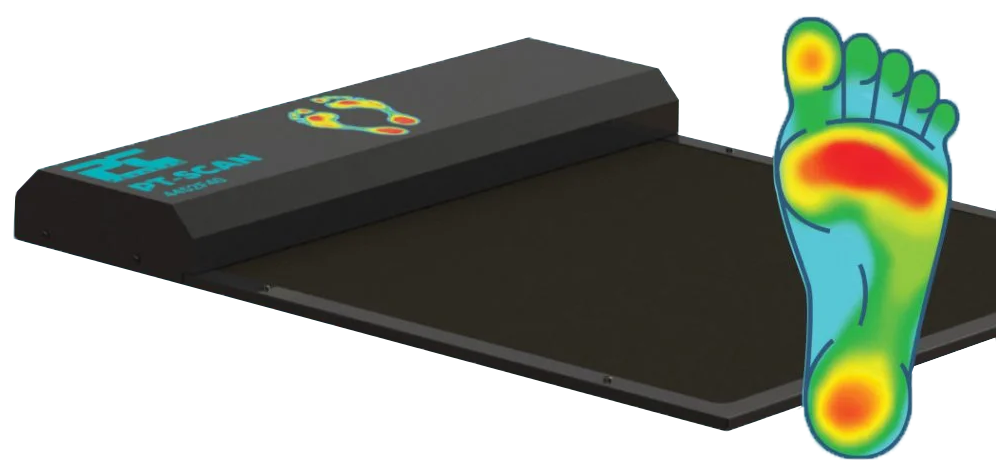
Foot pressure scanner is a precise platform for foot pressure mapping, capturing all relevant data and specialized graphs essential for foot pressure analysis across three test modes: static, dynamic, and balance.
Our Foot Scanner delivers high-resolution scanning of plantar pressure in minimum time, accurately defining the distribution profile of foot pressure with its advanced high-speed pressure mat sensor technology over 2200 sensors.
Complete Foot Correction for Deformities & Alignment Pain
Your feet are the foundation of your entire skeletal framework. A structural deformity or misalignment at the ground level travels upward, frequently manifesting as unexplained knee strain, hip misalignment, or severe lower back pain. Our non-invasive, 5-minute digital foot analysis is designed to precisely identify and guide the correction of a wide variety of conditions:
Flat Feet & Fallen Arches (Pes Planus): We analyze exactly how your arch collapses under motion to design targeted, rigid-yet-flexible arch supports that stop painful overpronation (the ankle rolling inward).
Ankles Turning In or Out in Kids (Child Varus & Valgus): Parents in Oman frequently notice their children walking awkwardly or wearing out one side of their shoes. Our specialized pediatric scans capture these alignment issues early, allowing us to correct growing bones safely.
Uneven Leg Length (Limb Length Discrepancy): When one leg is slightly shorter than the other, it shifts your entire pelvis. We calculate precise millimeter adjustments to design custom medical shoe lifts that balance your posture perfectly.
Chronic Heel Pain & Plantar Fasciitis: If you experience sharp, burning pain in the bottom of your foot during your first morning steps, our scan locates the high-strain zones causing the inflammation to relieve tension instantly.
Understanding Common Foot Problems We Solve
Many parents in Oman worry when they see their children "toe-walking" or notice their feet turning inward. It is important to know that early intervention is the key to preventing permanent bone and joint issues. Our clinic provides a comprehensive approach, from high-tech foot pressure scanning to the manual creation of medical shoes and insoles tailored specifically to your foot structure.
Flat Foot (Pes Planus)
This occurs when the arches of the feet are flattened, causing the entire sole to touch the floor. In children, this can affect their balance and cause early fatigue during play.
X-Leg (Genu Valgum)
Often known as "knock-knees," where the knees tilt inward and touch each other while the ankles remain apart.
Foot Varus & Valgus
These are misalignments where the foot twists inward (Varus) or outward (Valgus) at the ankle.
Pigeon Toed (In-toeing)
Very common in toddlers, this is when the toes point toward each other rather than straight ahead.
Toe Out (Out-toeing)
The opposite of pigeon-toed, where the feet point significantly outward.
Toe Walking
This is when a child walks on the balls of their feet without the heels touching the ground. If this continues past the toddler years, it may require orthopedic correction.
How Our Custom Insole Engineering Works
We bridge advanced clinical biomechanics with precision manufacturing to deliver custom-molded orthotics tailored exclusively to your unique footprint.
Static Pressure Mapping
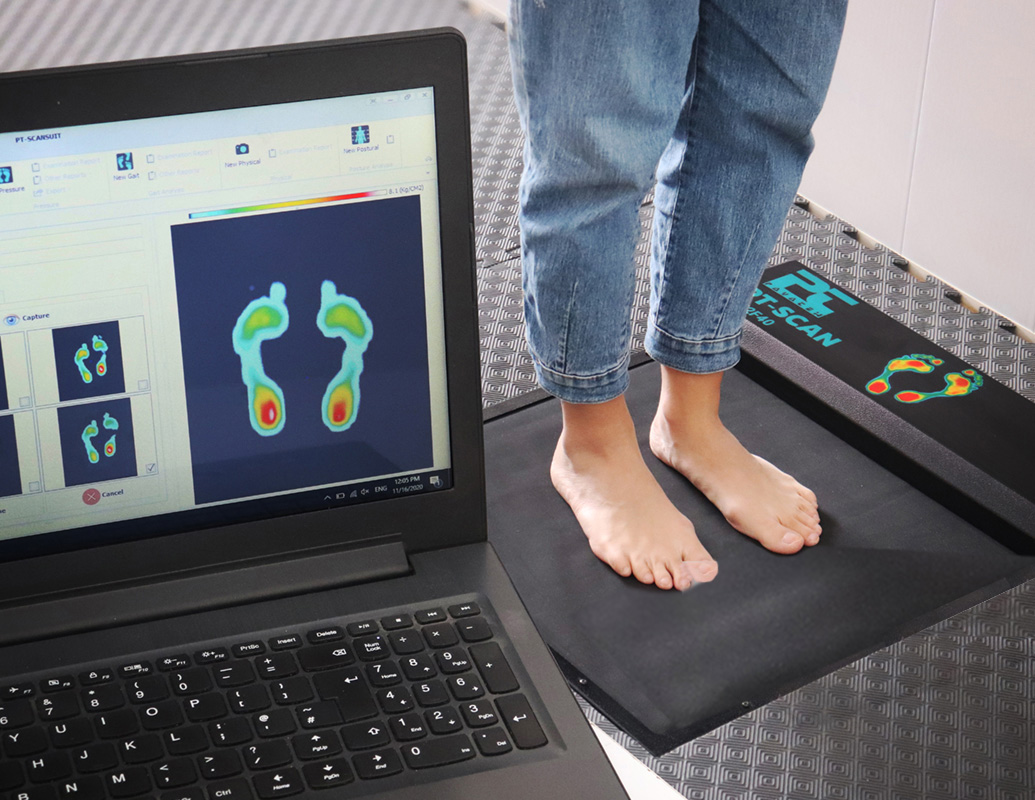
You will stand naturally on our specialized sensor matrix. The system instantly creates a live, color-coded visual map showing exactly how your body weight is distributed across your heels, midfoot, and toes.
Dynamic Gait Analysis
You will walk across our integrated tracking platform at your normal pace. The computer captures hundreds of frames per second, tracking your transition from heel-strike to toe-off to see how your joints and muscles behave under load.
3D Digital Modification
Our orthotic technicians import your digital data into advanced CAD software. We sculpt a precise 3D model that corrects your exact deformities, whether it requires balancing an uneven leg length or adding an internal heel wedge for flat feet.
Premium Medical Fabrication
Your custom orthotics are milled out of specialized, multi-density medical-grade materials. They are built to easily slide into your daily work shoes, athletic trainers, or premium medical shoes to keep you comfortable all day.
Static Foot Analysis
The patient stands on the surface of the device normally and in a standard position in the static foot scan test
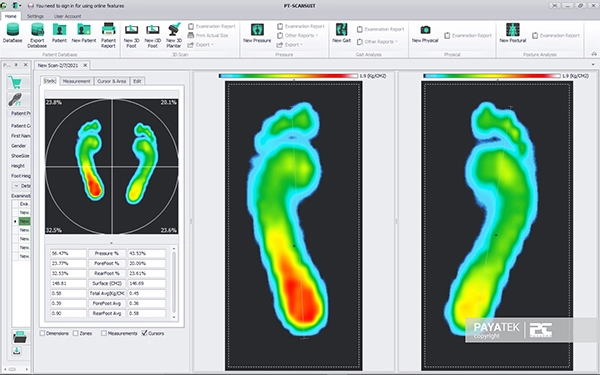
The software analyzes the foot pressure distribution data for each foot, determines the arch type of the foot in the static position, calculates the displacement of the body’s center of gravity, and compares the symmetry between the left and right feet.
Dynamic Foot Analysis
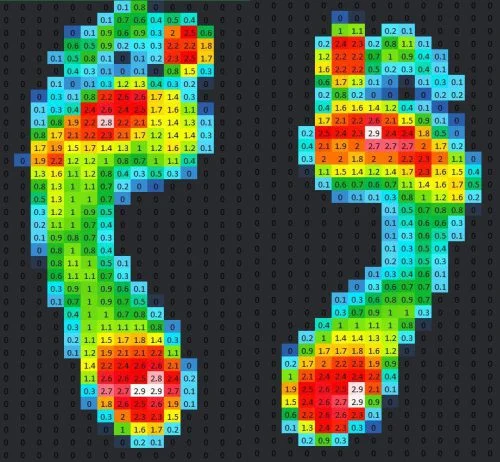
During the dynamic foot scan test, the patient walks normally over the device, taking a step and moving forward. Each foot, left and right, is tested separately. The software provides detailed reports on various parameters, including the arch type in gait mode, the COP Line (center of pressure), foot axis angle, high-pressure points of the foot during the gait cycle (average and maximum), and more.
What is your foot type?
The sole of the foot has three arches: two longitudinal arches (medial and lateral) and an anterior transverse arch. These arches are formed by the tarsal and metatarsal bones and are supported by the ligaments and tendons of the foot. Patients experiencing pain in the leg and back area usually have structural problems of the foot and ankle, and the accurate evaluation of these patients is so important. One of the key functionalities of PayaTek foot pressure scanner is to detect the type of plantar arch and assess the distribution of plantar pressure in both longitudinal and transverse areas of the foot arch.
Identify areas prone to ulcers in the neuropathic foot
Identify areas prone to ulcers in the neuropathic foot The cause of diabetic foot ulcers is usually the deformed structure of the foot skeleton due to neuropathy, which causes unusual plantar pressures. Research shows that 20% of hospitalizations for diabetics are due to foot ulcers. Specialists use a foot pressure scanner to identify areas prone to ulcers in a diabetic patient and to take preventive measures such as using appropriate insoles and shoes.
Successful cases
in 3 month.
Who will get excitedhappy about Foot Pressure Scan...
- Podiatrists
- Orthopedics
- Rehabilitation
- Physiotherapy
- Corrective exercises
- Endocrinology
- Diabetes
- Wound care
Dr. Flora Hajizadeh
Orthopedic & Foot Specialist
Orthosis is an external medical device used to support, immobilize, or treat muscles, joints, or skeletal parts which are weak, ineffective, deformed, or injured It is an orthopedic appliance or apparatus used to support, align, prevent, or correct deformities or to improve function of movable parts of the body.
They are used as a way to correct deformities in children. They are also used to improve posture and to help with walking. Today, orthotics are commonly used to treat a variety of conditions. Orthotics can help improve your balance and stability, which can reduce the risk of falls.
They can also help to correct any abnormal walking patterns, which can lead to improved posture and reduced pain. Additionally, orthotics can improve blood circulation and joint function.
If you are experiencing foot or ankle pain, it is important to consult with a podiatrist to see if orthotics may be right for you. Take a look at how orthotics can specifically help you regarding certain conditions.

Reference: Foot pressure scanner | PT-SCAN